Ověřím, co se odehrálo na jednáních ve Švýcarsku ohledně Hormuzu.Ověřeno. Jednání proběhla ve Švýcarsku (Lake Lucerne Summit, 21.–22. června) a Vance ohlásil pokrok včetně mechanismu pro udržení Hormuzu otevřeného. Tady je upravený text s doplněním u bodu 6:

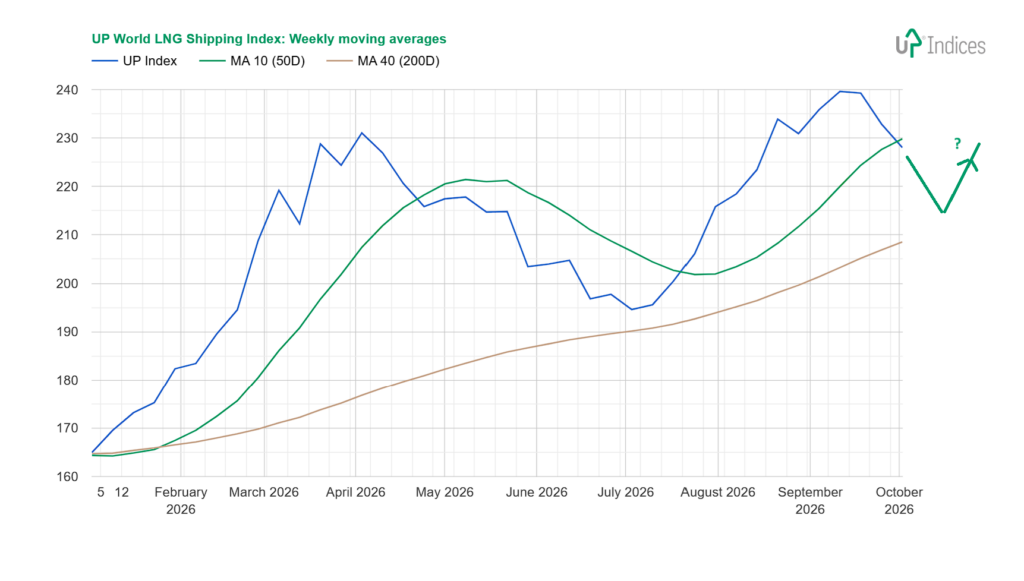
The UP World LNG Shipping Index chart maps the dramatic 2026 rally and subsequent decline against the key milestones of the US-Israel conflict with Iran. The index began the year around 160 points, drifting sideways through early January. The first signs of building tension emerged on 5 January (1), when Israel’s Security Cabinet authorised additional strikes on Iran (Operation Iron Strike) against the backdrop of mass protests across Iranian cities. Pressure escalated further with the 25 February (2) US Treasury sanctions on Iran’s oil shipping network, followed by the decisive 28 February (3) US-Israel strikes on Iran, which triggered Iranian retaliation and the closure of the Strait of Hormuz. This geopolitical shock propelled the index sharply higher through March, climbing from around 175 points to a peak of 231 points in early April—a near-vertical ascent driven by anticipated disruption to global LNG flows.

The peak coincided almost precisely with the 7-8 April (4) ceasefire agreement between the US and Iran, which included provisions to reopen the Strait of Hormuz. However, the strait never actually reopened—by 9 April (5), there was no sign of implementation, and the US subsequently imposed a naval blockade. This explains why the index, despite retreating from its peak, found support and traded sideways through May rather than collapsing: the underlying disruption persisted even as the formal ceasefire held. The index oscillated between 215 and 218 points through May before the most recent leg lower, declining towards 197 points.

The latest decline at point 6 reflects the 17 June memorandum of understanding, which established a 60-day ceasefire extension, followed by the 21-22 June US-Iran talks in Switzerland (the Lake Lucerne Summit). Vice President Vance reported significant progress, including a mechanism intended to keep the Strait of Hormuz open and prevent shipping-lane disputes from escalating. Notably, ships had already begun transiting after the interim agreement—with 55 merchant vessels passing in a single day—easing the geopolitical risk premium that had supported the index. However, the situation remains fragile: Iran again claimed to close the strait over Israeli strikes in Lebanon, whilst the US maintains the waterway is open.

Technically, the index has now broken below both moving averages, with the 10-week MA (around 211 points) beginning to roll over after months of steady ascent. This reflects the unwinding of the war premium. Yet the 40-week MA continues its gradual climb towards 189 points, preserving the longer-term uptrend structure. The critical question is whether structural disruption—particularly Qatar’s damaged facilities and the still-uncertain Hormuz passage—provides enough fundamental support to halt the decline before the longer-term trend is threatened.

Week 25-2026: Chart of the performance of the UP World LNG Shipping Index with MAs (Source: UP-Indices.com)